


Why people are regretted for buying a home in Canada ?
 Thinking about it feels easy.
But when you actually have to do it, it becomes much harder.
There is a definite guarantee that somewhere, somehow, you will get stuck.
These days, in the market and especially on social media, this whole thing is heavily glamorized.
And the reality is told only after the goat is already trapped.
So brother, many of you reading this either:
- plan to buy a house in Canada in the future,
- are already planning to buy one,
- or are currently in the buying process.
In today’s chapter, we’ll talk аbout:
- some mistakes,
- some learnings,
- some personal experiences,
- and some right decisions
Social Media Trap: “Why Rent When You Can Own?”
First thing — these days on Instagram, TikTok, etc., you must have seen many reels and videos where they say:
“Bro, why rent when you can own?
Just pay $500 monthly, and this beautiful four-bedroom house with two garages, a nice basement, and a spacious living room will be yours.”
Or they say:
“Just $2000 monthly, and you can own this house.”
People get hooked.
They are hooked very smartly in these videos.
But when you watch till the end, they tell you:
“Actually, the real mortgage payment is $4000–$4500 or even more, but the basement is fully furnished and legal, so you’ll rent it out. Or you’ll rent out one upstairs room. You’ll get $2500 from rent, and you’ll add your $500, and then the mortgage will be covered.”
Now okay — this is called house hacking, and many people do it.
But in our personal opinion, you should never buy a house by relying on rent.
You never know:
- rent may not come for 2–3 months,
- immigration might slow down,
- Airbnb might not work in that city,
- or rentals may stop completely.
You buy a house thinking:
“Half will come from rent, half I’ll pay.”
But if rent doesn’t come, you’re stuck.
The person selling you the house — realtor, mortgage agent — will sell it and move on.
They’ll get their commission.
But you will be stuck with:
- mortgage payments,
- monthly expenses,
- house-related costs.
And if you miss 3–4 mortgage payments, the bank will be sitting on your head.
Plus, as you already know, Canada is going through recession-like conditions.
Layoffs can happen anytime.
Jobs can be lost.
So plan very carefully.
House hacking is fine — We are not saying don’t do it.
But don’t rely on it to afford the house.
First make sure you can afford the house without renting anything.
After that, rent becomes additional income, not survival income.
Down Payment Reality
Now comes the down payment.
Many videos say:
“Minimum down payment in Canada is 5%.”
They’ll say:
“This is a $700,000 house — just $35,000 down payment and $2000 monthly payment.”
Then they add:
“$2500 will come from basement rent.”
But technically, this is misleading.
Yes, 5% is the minimum down payment — but only up to $500,000.
If the house value is above $500,000:
- First $500k → 5%
- Remaining amount → 10%
So a $700,000 house actually needs $45,000 minimum, not $35,000.
This is again told after the buyer is trapped.
Also, people say:
“Pay $5000 now.
Pay $2000 now.
Remaining amount after one year.”
But no one tells you how much the remaining amount will be.
In our opinion, minimum down payment should not be done if you want financial stability.
At least 10% down payment is healthier.
How much you choose — 5%, 10%, 20% — that’s your decision.
But with 5%, mortgage payments become very high.
At the start, it feels manageable.
You think:
“We’ll manage somehow.
We’ll do extra work.
We’ll arrange $500 monthly.”
Thinking is easy.
Doing it every month is very hard.
Emergency Fund Is Mandatory
If you have saved $80,000 or $100,000 — that does not mean all of it goes into down payment.
You must keep at least 3–6 months of emergency funds.
For example:
If your monthly expenses will be $5000, you must keep at least $15,000–$20,000 aside.
Plus:
- lawyer fees
- land transfer tax
- insurance
- closing costs
That alone can be $10,000–$11,000.
Only after subtracting emergency funds and closing costs does your real down payment appear.
Don’t put all your savings into the house.
FOMO & Comparison Trap
Don’t buy a house because:
- your friend bought one,
- he has two garages,
- a big backyard,
- a pool table in the basement.
You never know:
- where his money is coming from,
- what side business he has,
- what extra income streams he runs.
Everyone has a different timeline.
Buying a house because you feel:
“I’m behind in life”
is a guaranteed way to get stuck.
Your First Home Is Not Your Last Home
Your first home in Canada does not have to be your final home.
Over time:
- you build equity,
- property value increases,
- family grows.
You can:
- start with a townhouse,
- move to semi-detached,
- sell or rent the old house.
Upgrading is normal.
Owning vs Renting: Hidden Costs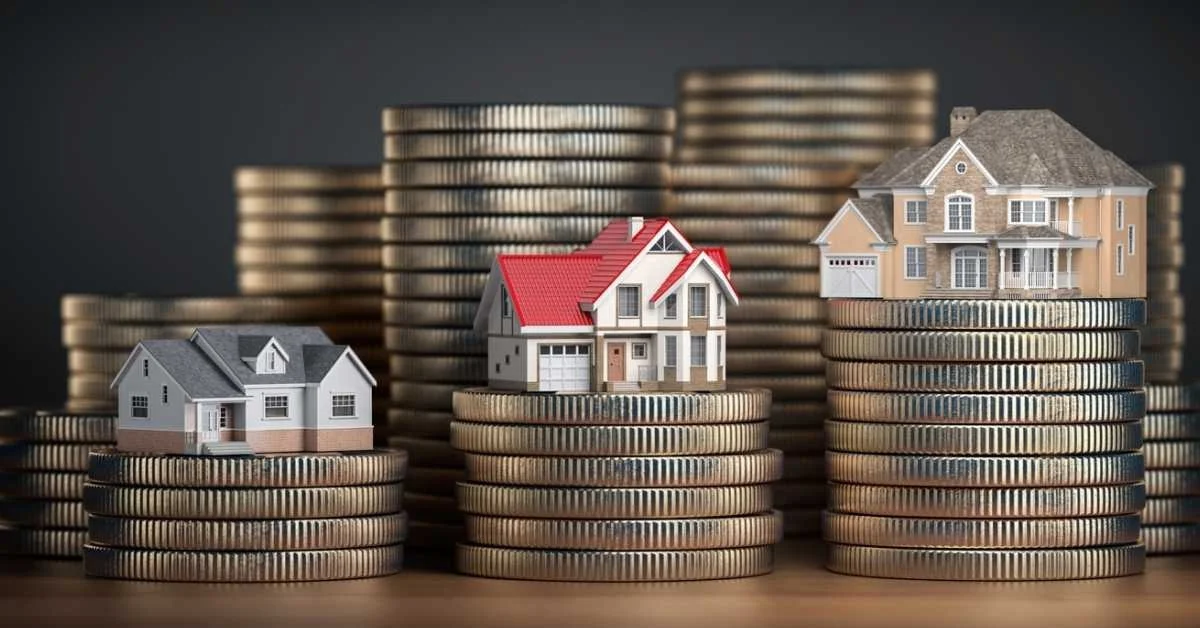
“Yes, $2000 rent vs $2000 mortgage” sounds logical — but it’s incomplete information.
When you rent:
- rent
- utilities
- sometimes parking
That’s it.
When you own:
- mortgage
- utilities (they increase automatically)
- maintenance
- repairs
- property tax ($300–$350 monthly)
- home insurance
- strata / maintenance fees (for community homes)
Maintenance alone can cost $4000–$5000 per year, even in newer houses.
Suddenly, that $2000 becomes $3500, and you don’t even realize when it happened.
Final Thought
Buying a house is not a bad decision.
It’s also not a trap — if planned properly.
Many people feel:
- stability
- accomplishment
- emotional attachment
Life is not lived only on Excel sheets.
But never buy an unaffordable house.
All housing-related expenses should stay within 40–45% of your post-tax income.
If that fits — system is set.

Apply for Visa
Borders are just lines—your courage is limitless


Apply for Residency
Because home isn’t a place — it’s where your story grows.