


How to apply for a green card on your own
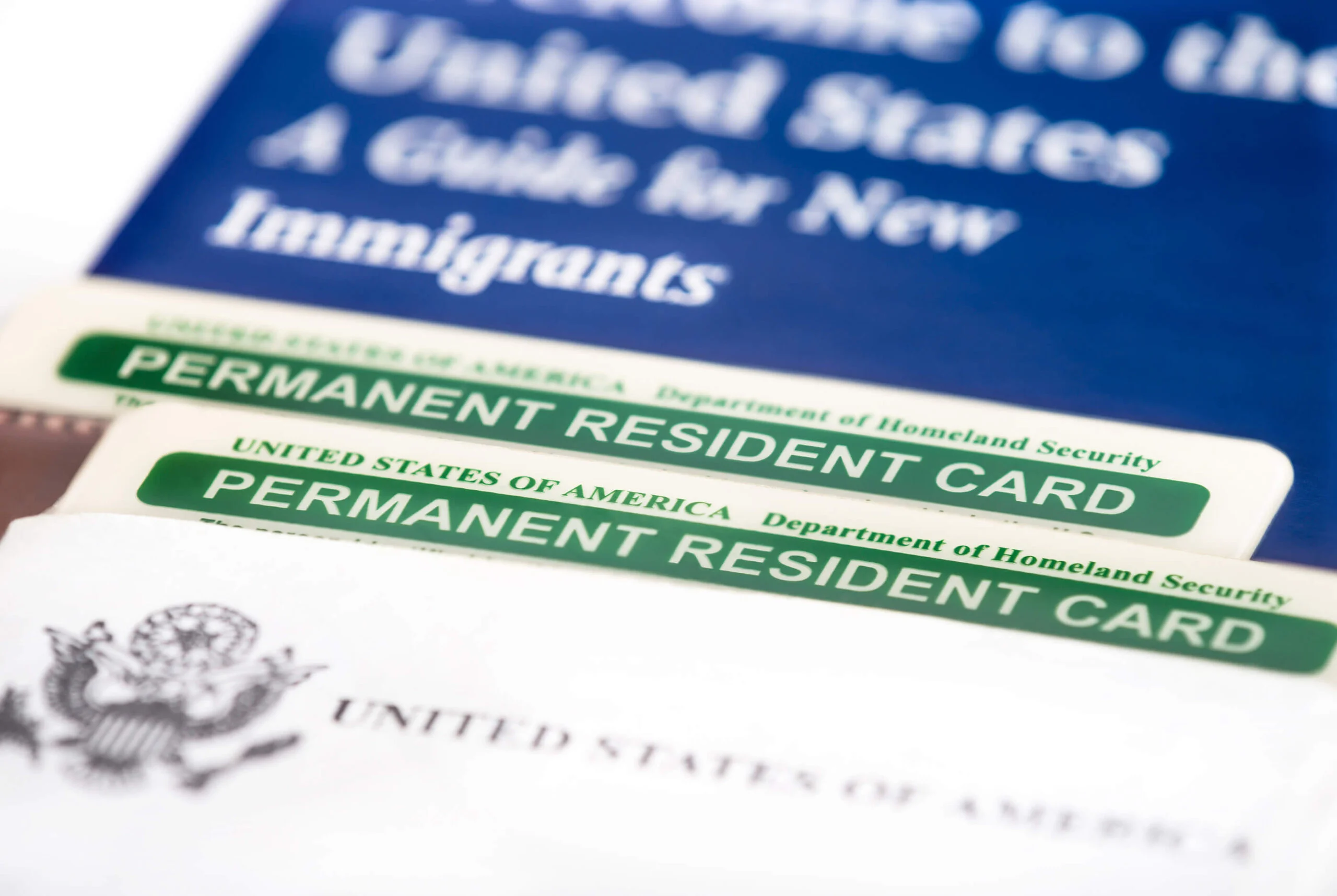 If you want to move to the United States because of your professional achievements, or stay here for the very same reason, this news is exactly for you.
We will explain two of the most popular visas that people who have reached a certain level of professional development can apply for without the need to find an employer in the U.S.
You can apply for these visas from abroad, or, if you are already in the United States, you can apply from inside the country as well.
This is your opportunity.
These are EB-1 — for individuals with extraordinary ability —
and EB-2 with a National Interest Waiver.
Here, we will break down the differences between these visas and the opportunities they open up.
The EB-1 petition is for those who have achieved recognition and success in science, arts, education, business, or sports.
Here, your personal contribution and achievements are evaluated.
EB-2 National Interest Waiver is suitable for those who have a master’s degree or higher, or exceptional abilities, and whose work is important to the United States.
The key factors are recognition or real benefit to the country.
You can file documents from outside the U.S.
You do not need to be in the United States at the beginning, which makes this option convenient and accessible for many professionals.
Both of these visas — both immigration petitions — are filed using Form I-140.
Of course, the criteria and requirements for each category are different and unique.
If you are in the U.S., you can file this petition.
The waiting time depends on the priority date — the date after which an approved petition can be used to apply for a visa or a green card.
With EB-2 National Interest Waiver, you will have to wait longer before applying for a green card.
In the case of EB-1, you can often file the petition and the green card application at the same time, without delays.
So, both options are available to those outside the U.S. and to those already in the country.
But with EB-2, you will need to wait longer before you can use the approved petition.
By the time you are eligible to use it, if you are in the U.S., you must show that you maintained lawful nonimmigrant status during your entire stay, or violated it for no more than 180 days.
This is extremely important.
The EB-1 category, unlike EB-2 National Interest Waiver, is current for most countries.
Often, even someone with a short-term B1/B2 visa can simultaneously file an EB-1 petition and a green card application.
These two options differ from traditional employer sponsorship.
First, you do not need to find an employer — you can self-petition.
Second, they are faster than traditional EB-2 with labor certification.
Even EB-2 NIW, which is slower than EB-1, is still faster than EB-2 with permanent labor certification, where an employer must test the labor market.
Labor certification takes a long time.
There are also three options for unskilled workers, but remember that the employer must be willing to participate in the process for several years due to priority date backlogs or visa processing abroad.
So, what is the unique feature of these two paths?
You may discover that everything comes down to being extraordinary.
You must prove that you received a major national or international award — for example, winning the Olympic Games.
Or you must prove that you meet three out of ten criteria and have earned national or international recognition in your field.
It is important that in the U.S. you continue working in the same profession.
You cannot apply for a green card just to stay and work in a different field.
The goal of the program is to attract talented professionals who will continue developing the same field.
All of this must be clearly documented in the petition.
The United States is interested in your talents.
They want you to develop in the U.S. in the field where you have already achieved high results.
This is critical when planning your career.
This also matters when you describe your work.
For example, if you are a talented athlete who competed and received national and international awards, and then you decide to change professions — say, stop competing and become a coach — you must be very careful.
There have been cases where USCIS denied petitions, considering these to be two different paths.
To enter and contribute to the U.S., you must choose one clear path.
This is especially important for those who have achieved high recognition in multiple professions at once.
 To apply for an EB-1 visa, you must focus on one field and show exceptional success specifically in that field.
You need to choose one path and show how achievements in other areas support eligibility in that chosen field.
It is safer to avoid mixing and focus on one option.
When applying for EB-1 or EB-2 NIW, it is crucial to understand USCIS practice and requirements.
Knowing the nuances helps prepare strong evidence, publications, and proof of achievements.
This is the key to a successful petition and approval.
Even if your petition is approved, it does not guarantee an immediate visa or green card.
Mistakes in filing can lead to petition revocation — and this happens often.
In the U.S., approval does not mean permanent protection.
Petitions can be revoked at any time if USCIS later decides they should not have been approved.
For example, if the evidence provided turns out to be insufficient or incorrect.
That is why careful preparation and understanding the requirements in advance is essential to avoid unpleasant surprises later.
Even if you do not perfectly meet the requirements, you should still present the best possible evidence, not random materials.
Let us give you a detailed example related to publications.
USCIS treats online publications and printed media differently.
Publications in printed media are considered more significant and carry greater weight.
Printed press is preferred.
For EB-2 NIW, if you need to prove the equivalency of your education, keep in mind that USCIS may challenge this years later.
That is why it is extremely important that your credential evaluation is done by a highly respected and reliable company with an impeccable reputation.
Otherwise, during a future status interview, USCIS may say:
“We made a mistake approving this case because the evaluating company turned out to be unreliable or fraudulent.”
That is why, no matter how good ChatGPT is, it cannot replace an experienced and knowledgeable attorney, especially in complex cases like EB-1 or EB-2 National Interest Waiver.
Most problems arise due to incorrect criteria selection or weak evidence.
This can lead to denial.
In EB-1 extraordinary ability cases, USCIS often questions the selected criteria.
They may say an award is not significant enough, or that selection criteria are unclear, or that a publication is about the company, not about you personally.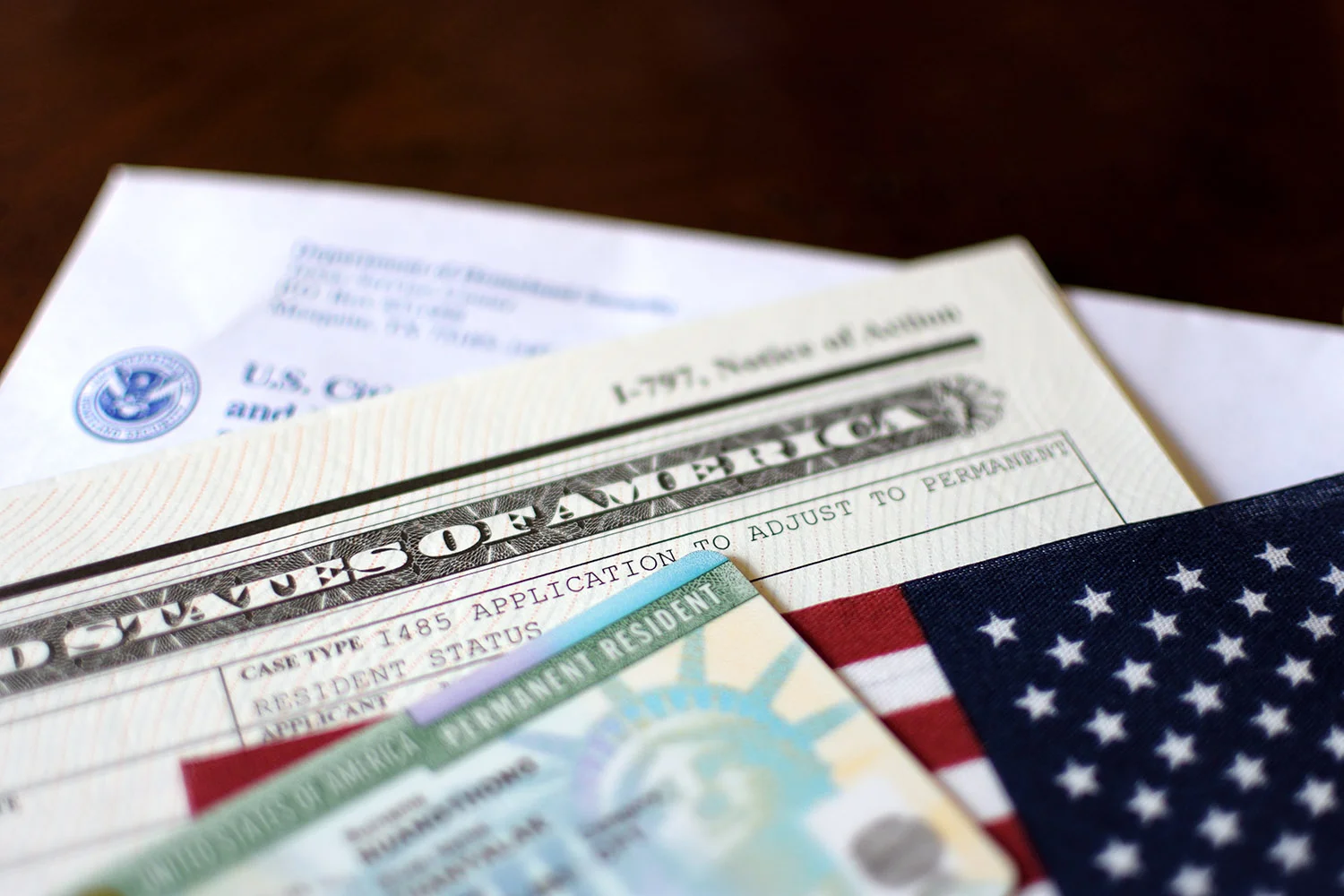
For EB-2 NIW, USCIS often argues that the work is too local and lacks national impact — even though local projects can strongly influence entire industries or regional development.
That is why proper documentation is critical.
All evidence must be authentic and correctly translated.
In the U.S., all non-English documents must have a certified translation.
Errors in translation often lead to Requests for Evidence and delays.
For example, USCIS may issue an RFE stating that the translation is incomplete or inaccurate, or that not all pages were translated.
Everything must be translated thoroughly and professionally.
When submitting screenshots as evidence, clean the page of unnecessary elements so the officer is not distracted.
Poor translation and careless work are unacceptable.
The quality of translation is extremely important.
What truly helps are expert recommendation letters.
They can be used for both EB-1 and EB-2 NIW.
You must clearly explain:
- What exactly did you do?
- Why is your achievement significant?
- What do you plan to do in the U.S.?
This statement helps the officer understand how to evaluate your case.
You must also show how you will benefit the country.
Do you need to be a Nobel Prize winner for EB-1?
No.
Athletes, researchers, musicians, entrepreneurs — many succeed.
The key is correct strategy and documentation.
For EB-1, a degree is not required.
For EB-2 NIW, a master’s degree or equivalent is generally required, though some entrepreneurs may qualify through exceptional ability — but this is much harder.
Finally, if you are currently in the U.S. in lawful nonimmigrant status and believe you qualify, We strongly recommend consulting a qualified attorney.
If you are on TPS and traveled with a TPS travel document and returned, under current rules as of July 20, 2025, you may be eligible to adjust status — especially under EB-1.
We wanted to mention this because thousands of people with TPS are looking for ways to stay in the U.S.
The Trump administration is canceling this status.
Now you know that if you reach a high level of recognition in your profession, you may be able to use one of these paths and obtain green cards for yourself and your family.

Apply for Visa
Borders are just lines—your courage is limitless


Apply for Residency
Because home isn’t a place — it’s where your story grows.