


4 easy ways to move to Canada
 Today we’re going to talk about a very interesting topic.
People often ask questions themselves аbout:
“What are the easiest ways to move to Canada?
What options are considered the simplest?”
And honestly, it’s very hard to answer this question specifically for everyone.
Because we are all different people.
We all have our own strengths and weaknesses.
Someone speaks English very well.
Someone earns good money but speaks English poorly.
Someone has a strong higher education.
Someone has solid work experience in industries that are important for Canada.
Today we want to touch on four options that are among the simplest from a paperwork and application point of view.
Let’s begin.
OPTION 1 — Tourist Visa
The first option we believe you can consider is a tourist visa.
You might say:
“Come on, a tourist visa? What kind of relocation is that?”
And on one hand, we agree with you.
But on the other hand — we don’t.
Let us explain.
Before moving to any country, you should at least visit it once.
Because bloggers (including me) can tell you how amazing Canada is,
how money grows on trees, how everything is perfect.
But then you arrive — and suddenly realize that everything is not so straightforward.
And you start thinking all bloggers are liars.
So you must see the country before emigrating.
Deciding to immigrate to a country you’ve never visited is strange.
Yes, we know people who immigrated to Canada without ever visiting it before —
and they are often surprised by things that don’t surprise us,
because we already know that every country has its own problems.
Now, here’s an important detail many people forget:
If you enter Canada on a tourist visa and later find a job,
you can legally change your status to a work permit.
There is nothing illegal about this.
Your original purpose of travel must not be job search,
because a tourist visa implies tourism.
But if you came to see Niagara Falls
and accidentally found a job —
you can change your status inside Canada, without leaving the country.
It’s a long process,
or you can go to the US border and return back —
this is called “flagpoling”.
You do not need a US visa for this.
That’s option number one.
OPTION 2 — Work Visa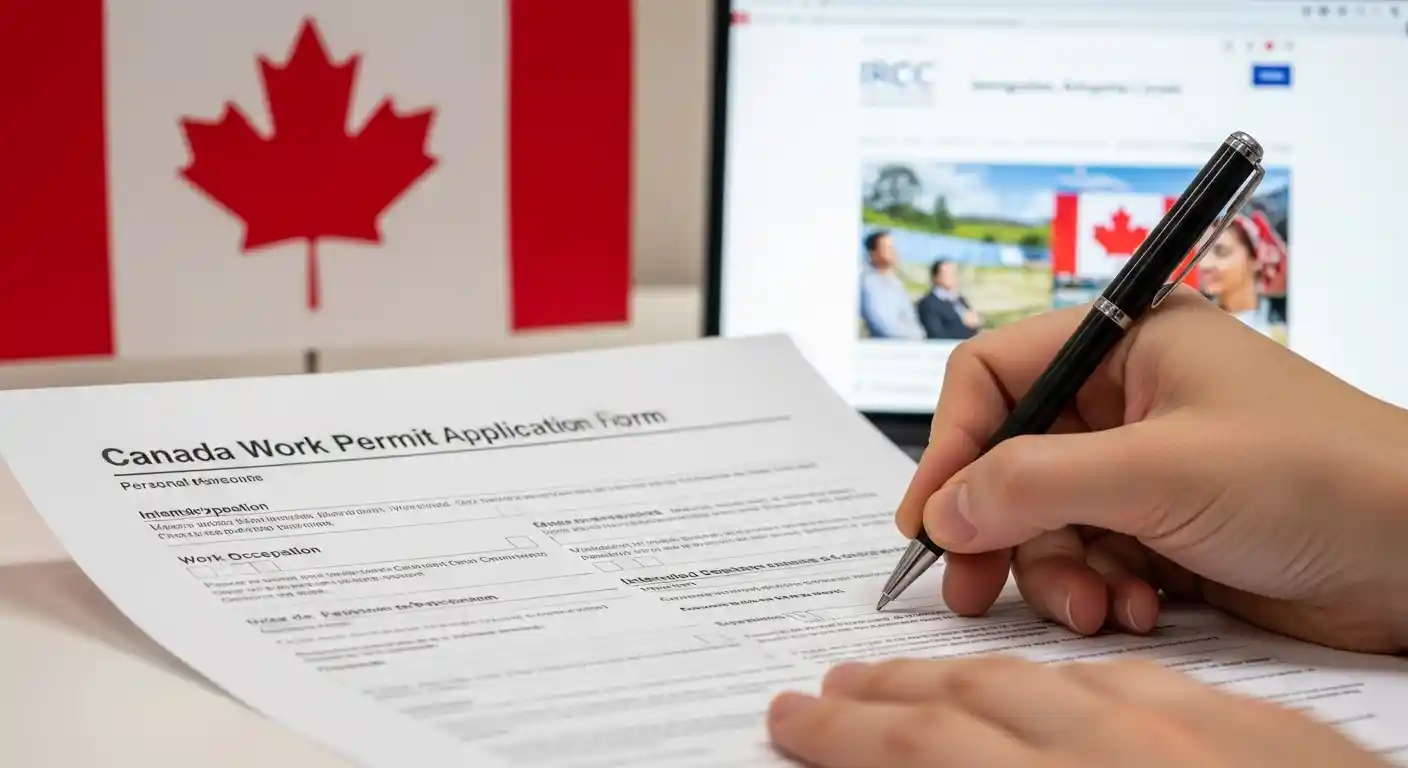
Canada’s current policy is simple:
Come, work, pay taxes — then apply for permanent residence.
Most immigration programs require Canadian work experience.
Even in Express Entry, you get extra points for Canadian experience.
How does it work?
You prepare a Canadian-style resume.
Then you start applying.
A lot.
Some people find jobs in 2–3 weeks.
Some take 2 years.
Luck matters.
Consistency matters even more.
You find an employer, they prepare documents,
you apply for a work visa,
you arrive in Canada, receive your work permit and SIN number,
work 1–2 years, and then apply for PR.
OPTION 3 — Atlantic Immigration Program
Originally a pilot program, now permanent.
Covers:
- Nova Scotia
- New Brunswick
- Prince Edward Island
- Newfoundland and Labrador
Main advantage:
Employers do NOT need LMIA.
You come on a work permit and apply for PR from inside Canada.
This program is still one of the best options.
OPTION 4 — Rural and Northern Immigration Pilot (RNIP)
This program is designed to develop small and remote communities.
You must find a job in one of the participating towns.
This program is becoming permanent as well —
and it’s one of the most promising options.
Conclusion
So, to summarize:
- Tourist visa
- Work visa
- Atlantic Immigration Program
- Rural & Northern Immigration Pilot
Everything is individual.
Some people have no education, no English, no experience —
and still want Canada.
But Canada needs immigrants who can work, communicate, and contribute.
That’s the reality.

Apply for Visa
Borders are just lines—your courage is limitless


Apply for Residency
Because home isn’t a place — it’s where your story grows.