


How to save taxes in Canada
 Do you know that an average Canadian pays more than half of their income in taxes? Yes, approximately 42.5% of the average income goes toward taxes. But there are some legal ways through which you can save those taxes, so read this news till the end.
But the big question is: should we really be paying so much tax?
We often talk about free healthcare, clean roads, and education. However, even if we call them “free,” they are not actually free. To manage infrastructure, run the economy, and provide these facilities, taxes are necessary, because the government uses tax money to make our lives better in Canada.
But what are the strategies through which you can save your tax money? Let’s understand.
Very often, you hear that you can save tax using RRSP, and that is absolutely correct. Let’s understand what RRSP is and how it can help you save taxes.
 RRSP is a retirement fund that the government encourages you to contribute to, and it helps you during your retirement. Every year, you can contribute up to a certain limit, and this limit keeps increasing every year based on your T4 and salary.
If you deposit that amount into your RRSP, your total taxable income for that year is reduced.
Let us give you an example. Let’s assume your taxable income is $80,000. Now you want to reduce it by $20,000. If you deposit $20,000 into your RRSP, your taxable income for that year becomes $60,000. So automatically, if you’re paying tax at a certain percentage, you save tax on that $20,000.
In some companies, employers match RRSP contributions. This means if you are contributing $250 per month from your salary into RRSP, your employer also matches that amount. So it’s kind of free money. You put in $250, your employer puts in $250, and $500 goes into your RRSP. Of course, the tax benefit you receive is on your $250, but your accumulated fund grows much faster.
Another good thing is that RRSP can be used as a First-Time Home Buyer fund. You can withdraw this amount and use it for your home down payment if you’re buying your first house in Canada. That’s why we always encourage people to contribute to RRSP, so they can utilize it to buy their first home in Canada while also saving taxes. And if your employer is matching contributions, that’s the cherry on top.
RRSP has a yearly limit, and you cannot contribute beyond that, otherwise penalties apply. So always check with your CPA regarding your contribution limit and stay within it.
Now let’s move to the next point: TFSA – Tax-Free Savings Account.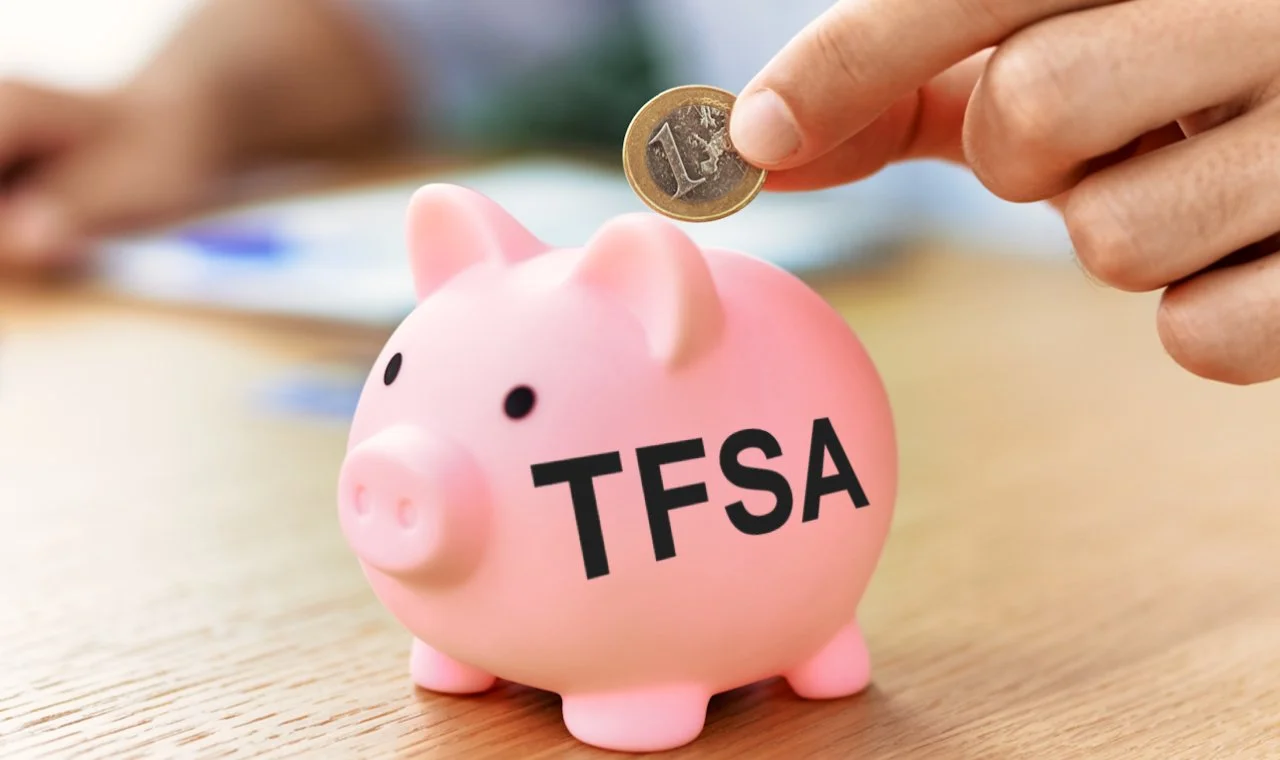
If you didn’t contribute to RRSP because your income was low, your income would already be taxed and deposited into your bank account. Now, if you invest that taxed money into a TFSA and let it grow year over year, even double, when you withdraw it, there is no tax. That’s the beauty of TFSA.
Like RRSP, TFSA also allows growth, and you can manage your funds based on your risk appetite. You can invest in high-risk funds for higher growth or low-risk funds for slower growth.
Let us give you an example. Our friend was contributing $500 every month into my TFSA starting in early 2019. He invested approximately $30,000 in total. Right now, that amount is around $45,000, which is very good growth. There is a limit, but as you earn more income every year, the TFSA limit also increases. So you should utilize it as much as possible.
Moomoo is an all-in-one trading platform trusted by over 24 million investors worldwide. It’s available in Canada, the US, Australia, Japan, Singapore, Malaysia, and Hong Kong. Its parent company is listed on NASDAQ with a market cap of over $11 billion, so you’re dealing with a serious financial powerhouse.
In terms of safety, Moomoo is fully regulated in Canada by CIRO and protected by CIPF, meaning your securities are protected up to $1 million per account. Your money is safe.
Moomoo offers low-cost trading. You can trade US stocks for less than $1 per share, with a minimum fee of $1.99 per trade. Currency conversion costs are low, saving up to 90% compared to traditional brokers. Canadian stock trades cost just $0.0149 per share with a minimum fee of $1.49.
You can open multiple account types including TFSA, RRSP, cash, and margin accounts. TFSA earnings are 100% tax-free, so you want to maximize every dollar inside your account.
Now let’s move to the next point.
As you know, the work-from-home culture has increased a lot in recent years. You can claim tax benefits for this as well. If you’re working from home, using electricity, internet, and even a portion of your rent or mortgage, you can claim those expenses as business expenses.
There is a simple method where you can claim $2 per day, or you can use the detailed method where you claim a percentage of your total expenses, such as 20–30%, depending on your usage.
Next point is tax credits. Many people are not aware of them, but they can save a lot of money. For example:
- Canada Workers Benefit (CWB) for low-income workers
- Medical expenses such as dental care and prescription medications
- First-Time Home Buyer Credit, which can give you up to $1,500
Always check with your CPA or CRA, as there are many tax credits available.
Next point is income splitting. If you have incorporated a business or run a side hustle, you can claim many expenses such as car expenses, software subscriptions, and digital services. You can also split income with your spouse if their income is lower by paying them a salary through the business. This helps reduce overall taxes.
Self-employed individuals often pay less tax compared to full-time employees because of these deductions.
So these are some effective ways to save taxes using RRSP, TFSA, work-from-home benefits, tax credits, and income splitting.
Related

Apply for Visa
Borders are just lines—your courage is limitless


Apply for Residency
Because home isn’t a place — it’s where your story grows.