


Immigration to Canada in 2026
 Today’s news is about one of the immigration programs to Canada that doesn’t require much. You only need at least some basic language skills — either English or French — and completed high school education. These are the minimum requirements for this program.
Today we will break down what this program is, how to immigrate through it, what the requirements are, what the government fees are.
Let’s begin.
 The program we’re talking about today is called Skilled Worker. In provincial programs, they’re all called pretty much the same. The difference is in the provinces.
Nova Scotia has a Skilled Worker program. Newfoundland has one. New Brunswick has one. They don’t really bother with creative naming. The difference is in the requirements and the province itself.
Today we’re talking about Nova Scotia.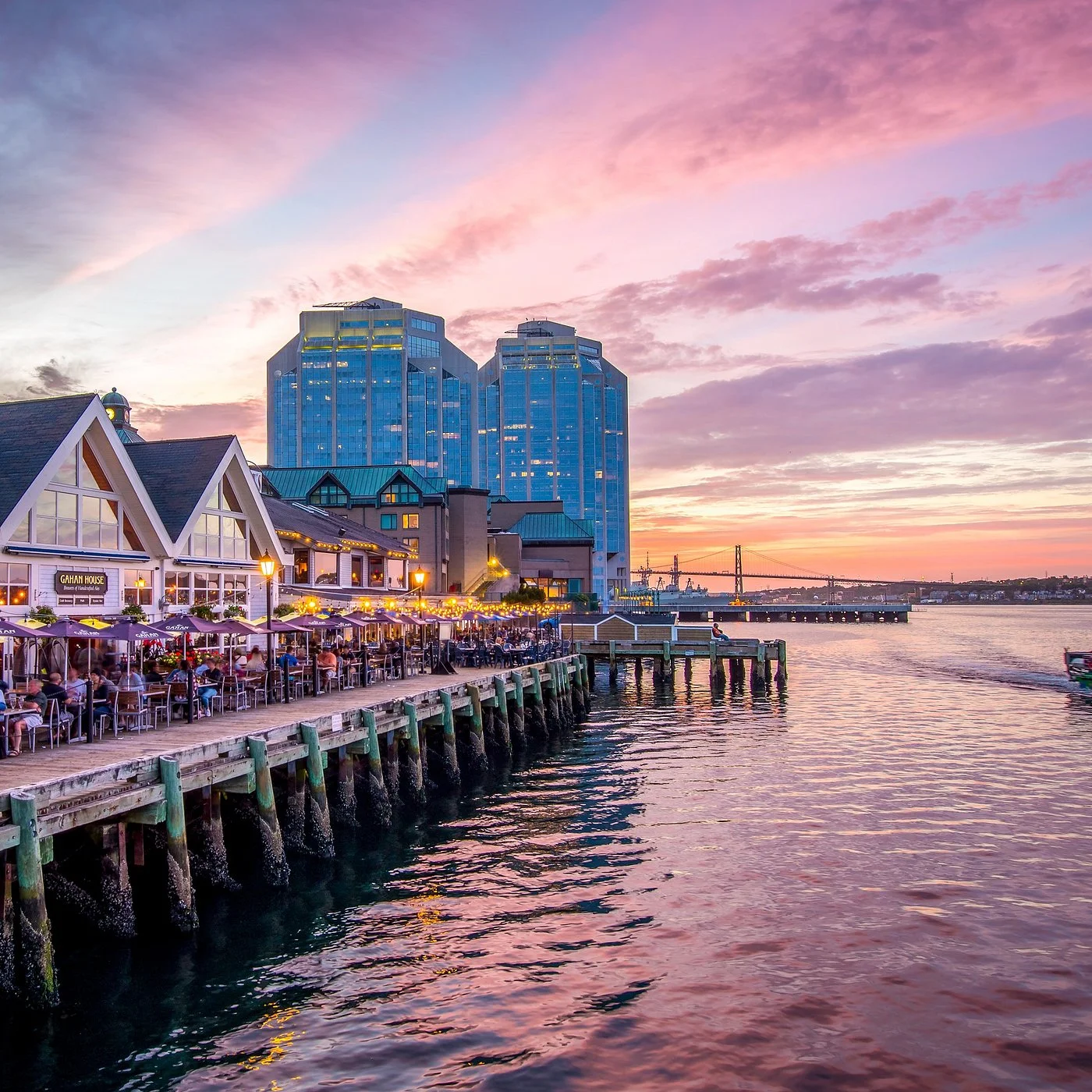
This is an amazing province. If you want to live near the Atlantic Ocean, close to nature — this is the place. It’s awesome. It’s really cool. Halifax is a decent-sized city, and around it there are smaller satellite towns with stunning views, lighthouses, fishing, the Atlantic Ocean — it’s incredible. We really recommend looking into this province.
So what is this program?
The Nova Scotia Skilled Worker stream helps employers hire and support the immigration of foreign workers and recently graduated international students whose skills are needed in Nova Scotia.
Got it? Got it. Moving on.
Government fees
How much does it cost to apply?
Zero dollars.
There is no government application fee as of January 13, 2025. No fee at all. We emphasize “as of today” because things can change tomorrow.
Age requirements
You must be between 21 and 55 years old.
If you’re under 21 — wait.
If you’re over 55 — unfortunately, you’ll need to look for another immigration program.
Education (the good part)
You only need completed high school education.
In post-Soviet countries, that means full secondary education — 11 grades, or 9 grades plus college, or anything higher. If you have higher education, that’s fine too. But the minimum is completed high school.
If you finished only 9 grades and didn’t continue studying — unfortunately, you won’t qualify. And honestly, you probably won’t qualify for most immigration programs at all.
We’ll give you a real example. A man came to Canada as a truck driver on a work permit. Everything was fine. But later, when it was time to apply for immigration, it turned out he didn’t have completed high school. He had to finish school while already in Canada, studying evenings after long shifts — in English. So finish school at home. It matters.
Job offer (the “annoying” requirement)
You must have a full-time, permanent job offer in Nova Scotia.
Your employer must be willing not only to hire you, but also to support immigration.
Work experience
You must have at least one year of relevant work experience in the same occupation.
If your job falls under NOC 0, 1, 2, or 3, you need one year of experience before applying.
If it’s NOC 4 or 5, you must first work six months in Nova Scotia for that employer before applying.
Please — understand your NOC code. This is critical.
Language requirements
Depending on the NOC level:
NOC 0–3 → CLB 5
NOC 4–5 → CLB 4
CLB 4 is the minimum level for immigration. CLB 5 is slightly higher. This is not federal-level English. It’s very achievable.
Additional requirements
- Proof of settlement funds (salary counts)
- Required certifications if your occupation needs them (licenses, permits, etc.)
If certification is required, you must obtain it before applying for immigration.
How to apply
You gather all documents:
- Education
- Language test
- Job offer
- Passports
- Family documents
- Travel history (last 10 years)
- Address history
- Settlement plan for Nova Scotia
Then you apply through the official Nova Scotia website by submitting an Expression of Interest.
The biggest downside
There are no clear processing times.
Some people get nominated in 4–5 months. Others wait over a year with no updates. Nova Scotia has more applicants than quotas, so now they select candidates from a pool.
If you’re outside Canada — not a big deal. Apply and wait.
If you’re already in Canada on a work permit — it’s risky, because your status is limited.
Final thoughts
This program has a big downside — unpredictability.
But the upside is low education and language requirements, and Nova Scotia is an amazing place to live.

Apply for Visa
Borders are just lines—your courage is limitless


Apply for Residency
Because home isn’t a place — it’s where your story grows.