


Express Entry is changing
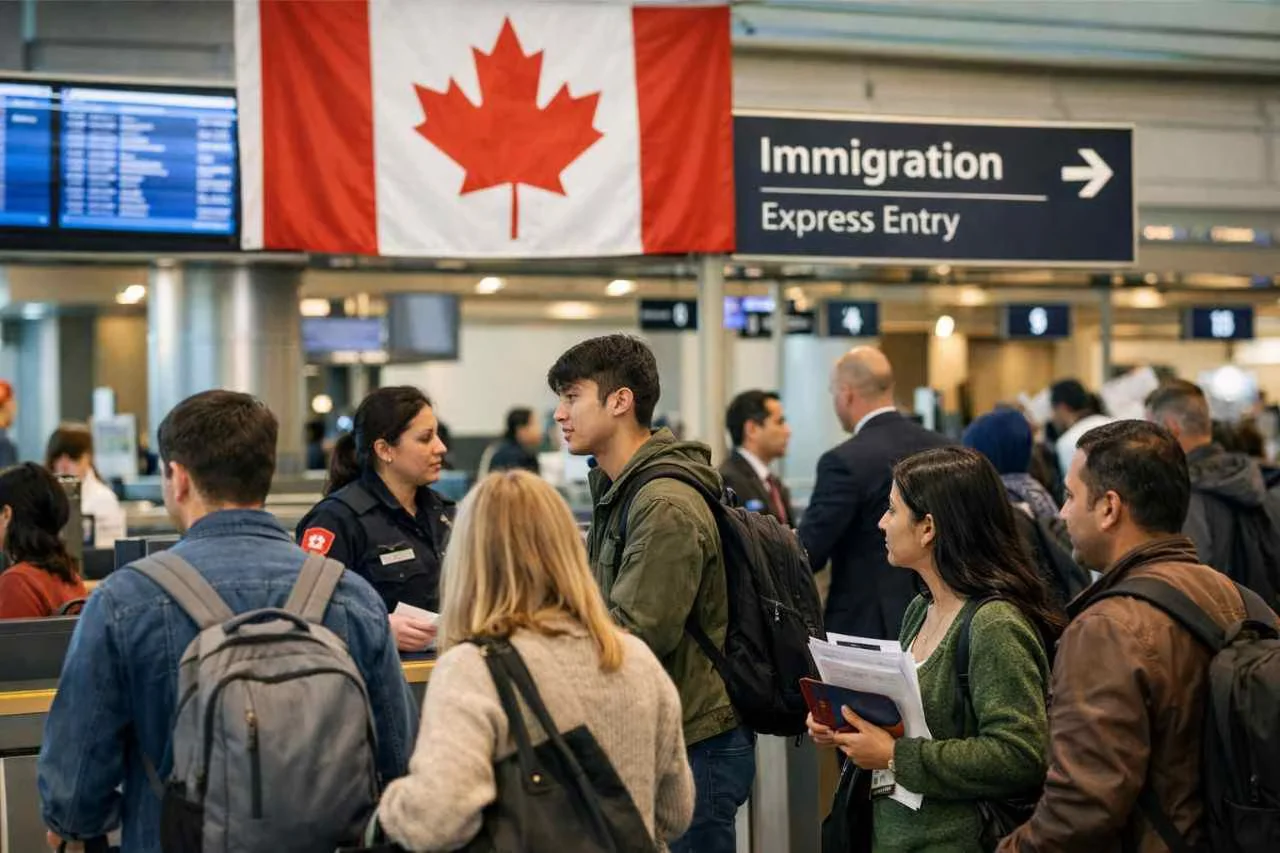 New changes in Canadian immigration.
Officials have announced the launch of a new priority category in Express Entry and 5,000 additional spots in provincial programs. They also promise accelerated work permit processing in just 14 days for certain candidates. And most interestingly, new invitations will start being issued already in early 2026.
Let’s break it all down.
Already the federal government is taking the next step. It is changing the rules for the entire country and launching a separate Express Entry category specifically for doctors.
Today, we’ll explain who will benefit from these changes, how much these specialists earn in Canada, and most importantly — whether you can immigrate through this new pathway.
But before we dive into the new category for medical doctors, we first need to talk about what Express Entry actually is. Without this, it’s impossible to understand how serious these changes really are.
Read until the end. we will honestly explain who this program truly works for and who will need to choose a different route. we will also make an important announcement.
Express Entry is Canada’s main federal immigration selection system. It operates on a points-based model: education, work experience, age, language skills, Canadian experience — all of these give you points. The more points you have, the higher your chance of receiving an invitation for permanent residence.
In 2023, a real revolution happened. Canada introduced targeted draws, which allow inviting not just candidates with high scores, but those working in specific priority fields: healthcare, engineering and technology, transportation, agriculture, construction, Francophone candidates, and education. This made the path to permanent residence much easier for those who fall into these priority categories. Passing scores in many targeted draws were significantly lower than in general draws.
As you may have noticed, Express Entry already has a healthcare workers category. It includes nurses, pharmacists, physiotherapists, and other specialists.
And now Canada is taking the next step — separating doctors into their own priority category.
Why did the government decide to create a separate pathway specifically for doctors?
The answer is simple: Canada has a critical shortage of medical professionals.
17% of adult Canadians — almost 6 million people — do not have a regular family doctor. And this is not only in rural areas — it’s across the entire country, including major cities.
Among children and youth, the situation is also serious. About 765,000 people — 11% — do not receive regular medical care.
Hospitals are operating at their limits, especially in rural and remote regions. The government understands that there are not enough domestic medical school graduates. And the only way to quickly close these gaps is to attract foreign-trained doctors and retain those already working in Canada..
Now let’s break down the key measure — the new Express Entry category.
This is a separate category created specifically for doctors who are already working in Canada.
These are not general draws where you compete with everyone, and not the broad healthcare category. These are targeted invitations specifically for foreign doctors with at least one year of Canadian work experience within the last three years.
Pay attention — Canadian experience is required. This means you must already be working in Canada.
The program is designed for those who are already here, treating patients, contributing to the healthcare system, but still holding temporary status.
We’ve already read about doctors who moved to Canada from the United States — apparently, something didn’t suit them in America. And now Canada is offering them a clear pathway to permanent residence.
When will invitations start?
Officially, in early 2026 — so very soon.
Now an important question: Which medical professions are included in the new program?
The official announcement lists three categories under the National Occupational Classification.
First: Specialists in clinical and laboratory medicine, NOC 31100.
This includes internists, cardiologists, neurologists, psychiatrists, radiologists, allergists, and other specialists.
Second: Surgeons and surgical specialists, NOC 31101.
Third: Family physicians and general practitioners, NOC 31102.
It’s important to understand that nurses, pharmacists, physiotherapists, and other healthcare workers are not included in this specific program. For them, the general healthcare category in Express Entry continues to apply..
Now let’s talk about another immigration pathway for doctors that was also announced.
The new Express Entry category is for those who have already worked in Canada for at least one year.
But what about doctors who have just received a license and a job offer but haven’t accumulated that year of experience yet?
For these candidates, the government is reserving 5,000 additional spots in provincial nomination programs. And the key word here is additional. These 5,000 spots are on top of regular annual quotas. That means provinces receive an extra tool to attract doctors without taking spots away from other categories.
How does this work?
A province identifies a licensed doctor with a job offer, nominates them, and the doctor applies for permanent residence. But there’s a problem: PR processing takes months, while hospitals need doctors right now, not in six months.
That’s why doctors nominated by provinces receive a work permit in just 14 days. This is literally a bridge between nomination and permanent residence. The doctor can start working immediately while their PR application is being processed.
Normally, work permits take months. Here — two weeks.
This shows how seriously the government treats the doctor shortage.
Now let’s talk about doctor salaries in Canada.
Exact numbers vary significantly depending on the province, specialization, and payment model — salary, contract, clinic expenses, and so on. But on average, the picture looks like this:
The annual income of a family doctor in Canada ranges from $200,000 to $350,000.
Specialist doctors can earn $300,000 to $500,000 or more, depending on province and specialization.
But there is an important nuance. Doctors in Canada do not always work as employees. About 70% of family doctors are independent practitioners who are paid per patient visit. That’s exactly why special immigration measures are so important for them.
And here comes the most unpleasant part for many viewers from CIS countries.
For them, this pathway looks very different — and now we’ll explain why.
Most doctors from CIS countries cannot start working as doctors in Canada right away. Why? Because full licensing is required. The exams are difficult and expensive. Residency is required. Foreign clinical experience is rarely recognized directly.
That’s why the new federal category is not a fast-track option for all foreign doctors. It’s more of a reward for those who have already gone through the long licensing process and are working under Canadian standards.
But don’t rush to get discouraged. There are several categories of Russian-speaking specialists for whom this pathway is quite realistic.
The first category — those who obtained medical education in the USA, Europe, Israel, or Australia. Their path to Canadian licensing is almost as straightforward as for local graduates. Credential recognition is faster, exams are easier to transfer, and residency may be shorter or not required at all.
The second category — those who work not as doctors but in related medical professions: clinical researchers, laboratory technicians, medical technologists, pharmacists, nurses, caregivers. For many of these fields, Canadian licensing is achievable within 1–2 years. And the general healthcare category in Express Entry applies to them.
The third category — the most underestimated pathway. Those who are willing to move to northern or remote regions of Canada — Yukon, Northwest Territories, Nunavut, and northern parts of provinces. These areas face an extreme shortage of medical staff. Provinces and territories actively recruit specialists and are ready to help with licensing, housing, and relocation bonuses. Competition is minimal, and nomination chances are very high.
Let’s look at specific examples.
Example one.
You are a family doctor, educated in Israel. Several years ago, you moved to Canada, completed licensing, and have been working in a clinic for one and a half years. You have Canadian experience, so you qualify for the new Express Entry category. Passing scores will likely be lower than in general draws. You apply and receive permanent residence.
Example two.
You are a surgeon, educated in Germany. You completed Canadian licensing and have just received a job offer from a hospital in Manitoba. You don’t yet have Canadian work experience. You don’t qualify for the Express Entry category — but the province can nominate you through the additional 5,000 spots. You receive a work permit in two weeks, start working, and wait for PR while already in Canada.
Both candidates can immigrate much faster than before.
Let’s summarize.
Regular immigration changes show that Canada remains interested in immigrants, but the ways to obtain permanent residence are changing. If your friends immigrated five years ago under one set of rules, those rules may no longer work today.

Apply for Visa
Borders are just lines—your courage is limitless


Apply for Residency
Because home isn’t a place — it’s where your story grows.